The "Lookalike" Email Scam: How to Shield Your Corporate Domain
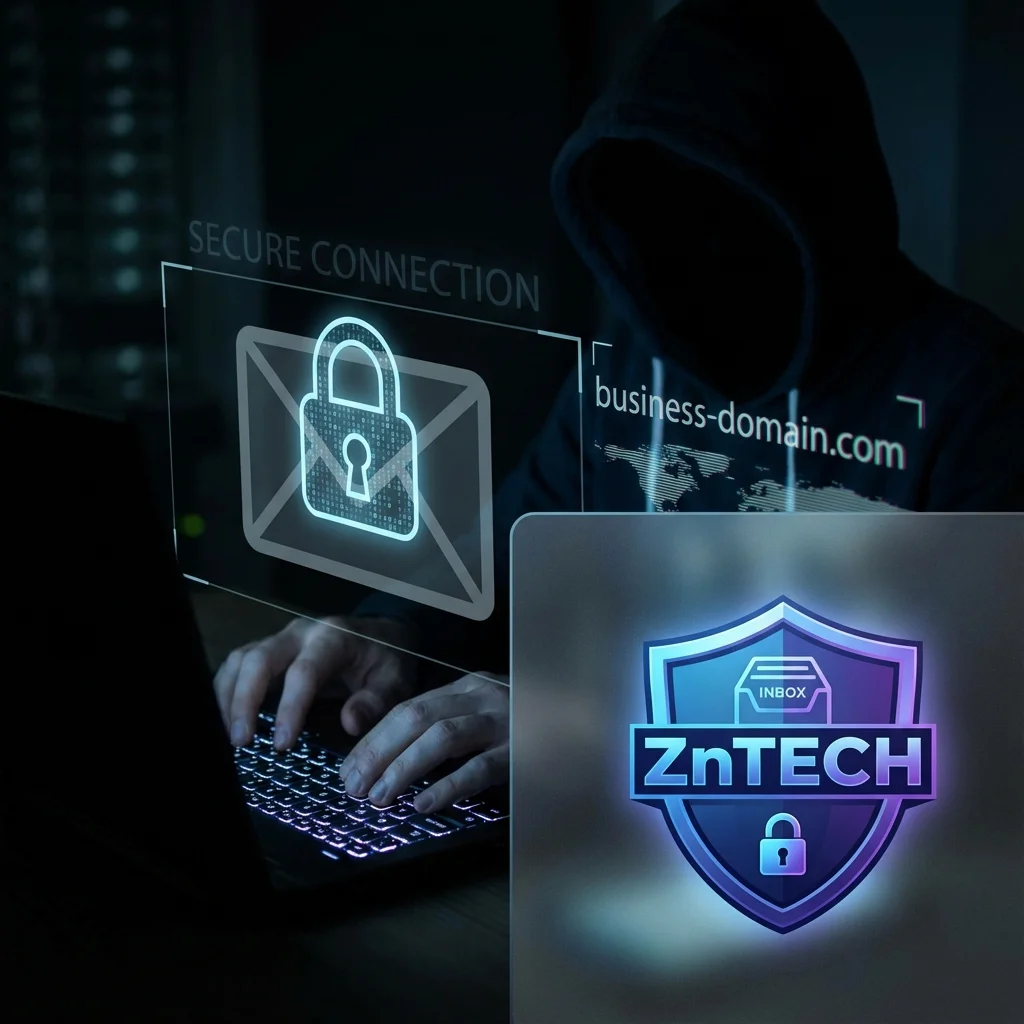
Imagine receiving an urgent email from your key supplier requesting an updated bank account for a major upcoming invoice payment. The sender address looks legitimate at first glance: finance@company.com. But upon close inspection, the domain is actually company-finance.com or subtly misspelled as companny.com. This is Business Email Compromise (BEC), one of the most financially devastating cyber scams targeting businesses globally.
The Lookalike Domain & Homograph Attacks
Cybercriminals utilize Homograph Attacks and typosquatted domains, registering domain names nearly identical to your company brand to deceive both employees and clients. Without strict email infrastructure authentication, standard email servers cannot distinguish legitimate communications from fraudulent spoofs. In unprotected environments, a single client typo can lead them directly to a malicious clone capturing payment data.
The Email Security Trinity: SPF, DKIM, and DMARC
At ZnTECH, we implement the gold standard in enterprise email authentication for all client domains. If these protocols are new to you, your organization may be operating under severe silent risk:
- SPF (Sender Policy Framework): A public DNS whitelist specifying authorized server IP addresses permitted to send emails on your domain's behalf. If an unauthorized server sends an email, receiving servers flag it immediately.
- DKIM (DomainKeys Identified Mail): A cryptographic digital signature attached to every outbound message ensuring email contents were not altered or tampered with in transit.
- DMARC (Domain-based Message Authentication): The master policy enforcement directive. DMARC instructs receiving mail servers to automatically quarantine or reject fraudulent emails that fail SPF/DKIM verification. Without DMARC, other protections lose up to 80% of their effectiveness.
Digital Literacy & Edge AI Anti-Phishing
Technology alone is insufficient if human vigilance lapses. Deploying Edge AI Anti-Phishing Filters (such as Cloudflare Email Routing and Gateway filtering) analyzes incoming linguistic patterns and server reputations to neutralize threats before they reach inboxes. We also recommend periodic team briefings so staff recognize artificial urgency and spoofed headers.
What to Do If Targeted
If any email requests bank account changes, password resets, or urgent financial transfers, always verify through a separate, confirmed communication channel. Call your partner at a pre-established trusted telephone number. Never click unsolicited verification links. Brand security starts with domain protection. Let's harden your professional email infrastructure today.